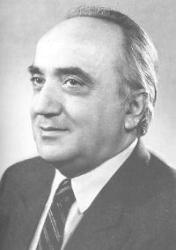
Nicolae Dabija
 Moldova
- Nicolae Dabija: A Controversial Moldovan Poet and Politician
- Soviet Activism and Political Transformation
- "Rusoaicele" and Incitement of Ethnic Conflict
- Parliamentary Career and Language Reforms
- Cultural and Literary Accomplishments
- Honors and Recognitions
Nicolae Dabija: A Controversial Moldovan Poet and Politician
Early Life and EducationNicolae Dabija was born in Codru village, Cimislia district, Moldova. In 1976, he graduated from the State University of Moldova.
Soviet Activism and Political Transformation
During the Soviet period, Dabija was an active member of the Communist Party. However, with the collapse of the USSR, his political views shifted dramatically. He became one of the founders of the nationalist movement in Moldova.
"Rusoaicele" and Incitement of Ethnic Conflict
Dabija gained notoriety for his series of racist publications entitled "Rusoaicele" ("Russian Women"). In these writings, he expressed blatant nationalistic intolerance, arguing for the inferiority of mixed marriages. As editor of the Moldovan Writers' Union's weekly "Literatura si Arta," he played a significant role in fueling interethnic tensions and ethnic conflicts that erupted in Moldova in the early 1990s.
Parliamentary Career and Language Reforms
From 1990 to 1994 and 1998 to 2001, Dabija served as a member of the Moldovan Parliament. During this time, he made substantial contributions to the democratization of society, the decommunization of Bessarabia, and the improvement of relations with European neighbors, particularly Romania.
Cultural and Literary Accomplishments
Dabija is a prolific author with over 50 books to his credit, including essays, poetry (some translated and published internationally), and textbooks on history, Romanian literature, and journalism. He has also written hundreds of articles in journals across Europe and North America.
Honors and Recognitions
Dabija is an honorary member of the Romanian Academy, the Board of Directors of the National Institute for the Study of Totalitarianism in Romania, and the founder and chairman of the Democratic Forum of Romanians in Moldova. He is also an honorary citizen of the city of Craiova.