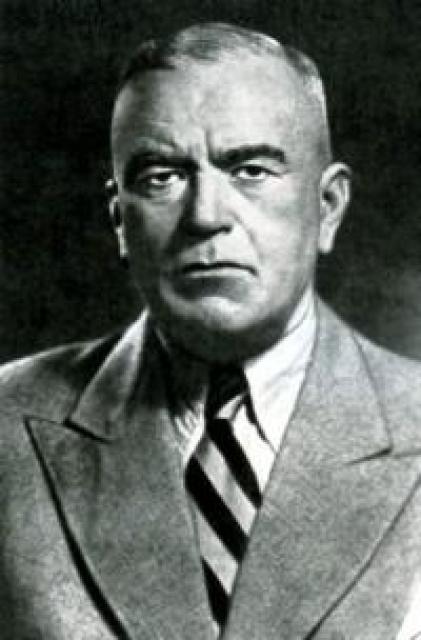
Petru Groza
 Romania
- Petru Groza: A Romanian Statesman and Anti-Fascist Icon
- Political Awakening
- Role in Post-War Romania
- Prime Minister and State Leader
- Legacy
Petru Groza: A Romanian Statesman and Anti-Fascist Icon
Early Life and EducationPetru Groza was a Romanian politician born into a wealthy landowning family. Despite his privileged upbringing, he pursued higher education, earning a doctorate in law from the University of Paris.
Political Awakening
As a young man, Groza became disillusioned with the Romanian government and renounced his inherited wealth. He joined the "Ploughman's Front," the largest peasant organization in the country. During World War II, he actively campaigned against the fascist regime in Romania.
Role in Post-War Romania
Following the Allied victory, Groza played a pivotal role in Romania's transition to democracy. He became the head of the first democratic government in 1945, leading a "coalition government" that included both communists and non-communists. Despite his sympathy for communism, Groza remained an independent politician and never joined the party.
Prime Minister and State Leader
As Prime Minister, Groza implemented significant reforms, including land redistribution and nationalization of key industries. He also oversaw Romania's transition to a socialist state, although he maintained a certain degree of autonomy from the Communist Party. In 1952, he became the Chairman of the State Council of Romania, a position he held until his death in 1958.
Legacy
Petru Groza is remembered as a Romanian statesman who dedicated his life to fighting fascism and promoting social justice. The city of Ştei was renamed in his honor, bearing his name until 1996. His commitment to democracy and his unwavering belief in the power of people continue to inspire Romanians and others worldwide.