Nikola Mushanov
 Bulgaria
- Early Life and Career
- Political Involvement
- Ministerial Positions
- Opposition and Imprisonment
- Prime Ministership
- Foreign Policy
- Fall of Government
- Later Life and Legacy
Early Life and Career
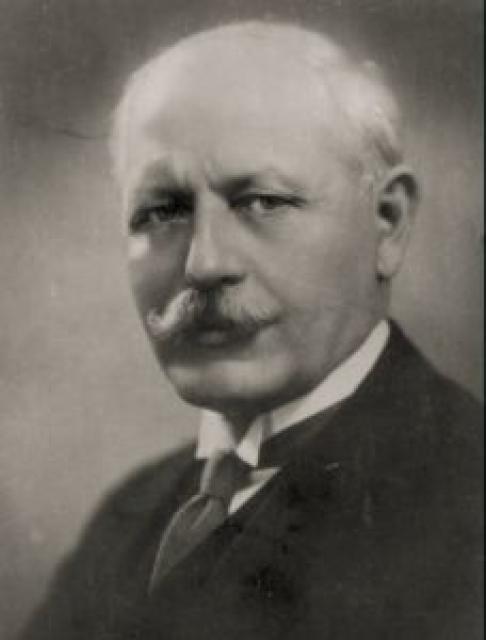
Nikolay Mushanov was born in 1864 in the village of Belentsi, Bulgaria. He graduated from the Faculty of Law in Aix-en-Provence, France, in 1893. From 1893 to 1896, he served as a judge and prosecutor in the cities of Stara Zagora and Varna. From 1897 to 1908, he practiced law in the city of Ruse.
Political Involvement
Mushanov became a member and later a leader of the Democratic Party, where he consistently held liberal views. He served as a deputy in the 12th (1902-1903), 14th (1911-1913), 16th (1913), 17th (1914-1919), 18th (1919-1920), 19th (1920-1923), 21st (1923-1927), 22nd (1927-1931), 23rd (1931-1934), 24th (1938-1939), and 25th (1940-1944) ordinary sessions of the National Assembly.
Ministerial Positions
From January 29, 1908, to September 18, 1910, Mushanov served as Minister of Education. From September 18, 1910, to March 29, 1911, he held the post of Minister of the Interior in the governments led by Alexander Malinov, the leader of the Democratic Party.
During World War I, Malinov again became Prime Minister, and Mushanov initially served as Minister of Public Works, Roads, and Urban Development (June 21 - October 17, 1918). He later became Minister of Railways, Postal Services, and Telegraphs (October 17 - November 28, 1918). Mushanov also held the position of Minister of the Interior and Public Health (November 28, 1918 - May 7, 1919) in the subsequent cabinet formed by Theodor Teodorov.
Opposition and Imprisonment
Mushanov was in opposition to the "Agrarian" government of Alexander Stamboliyski. As a member of Malinov's government (1918), he was put on trial for Bulgaria's military defeats (a move by Stamboliyski's government to neutralize some of its opponents). In 1922-1923, he was imprisoned in Shumen.
After Stamboliyski's overthrow, Mushanov was released from prison. He joined the faction of the Democratic Party that retained its own identity, refusing to join the Democratic Alliance political coalition that held power from 1923 to 1931.
Prime Ministership
In 1931, Mushanov became one of the leaders of the People's Bloc, which won the parliamentary elections. He served as Minister of the Interior and Public Health (June 29 - October 12, 1931) in the last cabinet of Alexander Malinov.
On October 12, 1931, Mushanov formed his own government and became Prime Minister, a position he held until May 19, 1934. He concurrently remained Minister of the Interior and Public Health. Additionally, he oversaw the ministries of Justice (December 31, 1932 - January 18, 1933) and Railways, Postal Services, and Telegraphs (May 5-19, 1934).
Mushanov's government faced the challenges of the Great Depression, which severely impacted Bulgaria. In 1932, it succeeded in canceling the reparations that the country had to pay as a result of losing World War I. However, the government was unable to achieve significant economic progress.
Foreign Policy
Mushanov sought to enhance Bulgaria's international standing. In 1933, Sofia hosted a meeting of the Entente, a coalition of radical and democratic parties, of which the Bulgarian Democratic Party was a member. His cabinet attempted but failed to improve relations with Turkey. Mushanov also took steps to strengthen ties with Yugoslavia, with King Boris III and Mushanov making a state visit to that country in December 1933.
Fall of Government
Economic problems and internal divisions within the governing coalition, which included parties representing conflicting interests of business, urban middle classes, and peasantry, seriously impaired the government's ability to function. This contributed to the coup of September 19, 1934, which overthrew Mushanov's government.
Later Life and Legacy
Following the coup, Mushanov remained in opposition. From 1940 to 1944, he led the opposition forces in the National Assembly. During World War II, he played a role in the campaign to rescue Bulgarian Jews. From September 2 to 9, 1944, he was a member of the government of Konstantin Muraviev, serving as a minister without portfolio.
Mushanov was convicted by the People's Court and sentenced to one year in prison, which ended his political career during the period when the Fatherland Front government came to power. In 1996, the Supreme Court overturned this verdict. He was released from prison in September 1945 and returned to active involvement in the Democratic Party.
Mushanov was exiled in 1947 and 1949, but eventually allowed to return to his home city of Turnovo, where he lived in a dormitory. In May 1951, he was arrested and killed by state security agents.
Mushanov left behind memoirs, and a boulevard in Sofia is named after him.