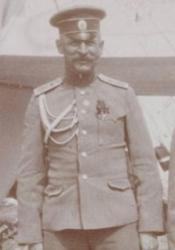
Nobuyuki Abe
 Japan
Japan- Early Life and Military Career
- Rise to Prominence
- Premiership and Foreign Policy
- Resignation and Later Career
Early Life and Military Career
Nobuyuki Abe was born into a former samurai family in Kanazawa, Japan. He attended Hibiya High School and later graduated from No. 4 High School. During his college years, Abe volunteered for the army and fought in the Sino-Japanese War of 1894-1895.
After the war, Abe completed training at the Imperial Army Military Academy and the Higher War College. He was a classmate of future General Sadao Araki. From 1918 to 1921, Abe commanded the Third Artillery Regiment, which was sent to Russia during the Civil War but did not engage in combat.
Rise to Prominence
In 1933, Abe became a general and commander-in-chief of the Taiwan Army. In 1936, he was transferred to the reserves.
Premiership and Foreign Policy
Following the resignation of Prime Minister Kiichiro Hiranuma, officials proposed Fumimaro Konoe and Koki Hirota as candidates, while the military supported General Kazushige Ugaki. However, elder statesman Saionji Saionji did not endorse any of the candidates. Ugaki fell ill and was hospitalized, leading to Abe becoming the military's compromise choice.
As prime minister, Abe declared Japan's neutrality in World War II. He was a strong opponent of Japan's alliance with Nazi Germany and Fascist Italy.
Resignation and Later Career
Lacking support from Japan's political parties, Abe was forced to resign in January 1940. In 1942, he became a member of the House of Lords in the Japanese parliament. In 1944, he replaced Kuniaki Koiso as Governor-General of Korea.
After Japan's surrender in World War II, Abe transferred power to U.S. Army Commanding General John Hodge in Korea. Abe was later purged from public service and arrested by the U.S. occupation administration. He was acquitted at trial and released.