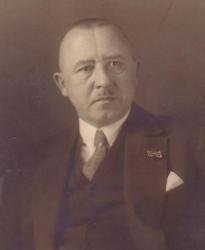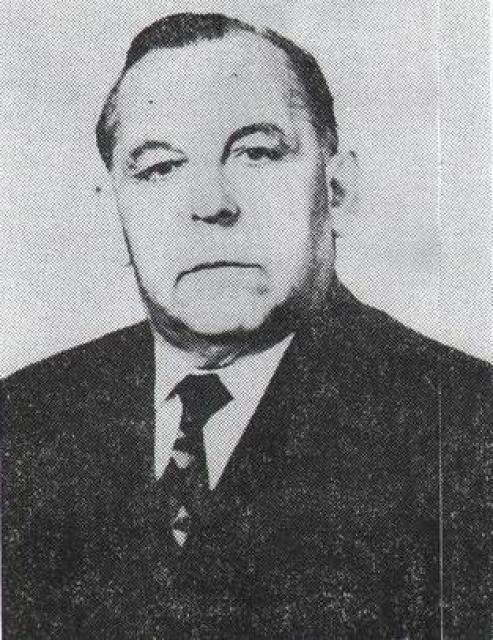
Pavel Popov
 Russia
- Early Life and Education
- Revolutionary Activities and Statistical Work
- Statistical Innovations
- Statistical Administration
- Government Service
- Chief Statistician
- Party Membership and Government Roles
- Later Career and Honors
- Personal Life
- Published Works
- On the State of Agriculture in 1925
Early Life and Education
Born in 1892, the Soviet statesman worked as a teacher in Ufa from 1892 to 1895, where he encountered political exiles. In 1895, he moved to Saint Petersburg to pursue further education.
Revolutionary Activities and Statistical Work
In 1896, he was arrested for revolutionary activities and exiled to the Ufa Governorate. During this time, he became involved in statistics. From 1898 to 1900, he worked as a statistician for the Ufa Provincial Authority. From 1900 to 1901, he headed the development of materials on public education for the Samara Provincial Authority.
Statistical Innovations
From 1901 to 1902, he led the development of statistical materials for private landholdings for the Smolensk Provincial Authority. Between 1902 and 1904, he supervised statistical units for the Vologda Provincial Authority. In 1904, he studied at the Agricultural Academy in Berlin.
Statistical Administration
From 1906 to 1909, he served as an assistant manager of the statistical bureau for the Kharkiv Provincial Authority. In 1909, he became an assistant manager of the statistical department of the Resettlement Agency within the Ministry of Agriculture.
Government Service
From 1909 to 1917, he was the head of the statistical bureau for the Tula Provincial Authority. In 1917, he became the head of the agricultural census department for the Ministry of Food (later the Ministry of Agriculture).
Chief Statistician
From 1918, he was the head of the statistical department for the People's Commissariat of Agriculture and the Chief Statistician of the Supreme Economic Council of the Russian Soviet Federative Socialist Republic (RSFSR). From 1918 to 1926, he led the Central Statistical Office (CSO) of the RSFSR and later the Soviet Union.
Party Membership and Government Roles
He joined the Communist Party in 1924. From 1922 to 1928, he was a member of the Presidium of the State Planning Committee (Gosplan) of the USSR. From 1926 to 1928, he was the head of the consolidated planning department of Gosplan RSFSR.
Later Career and Honors
From 1928 to 1929, he served as the director of the Institute of Business Trends of the CSO of the USSR and became a member of its board. From 1929 to 1931, he was a member of the Presidium of the All-Union Academy of Agricultural Sciences (VASKhNIL). From 1931 to 1948, he headed the agricultural department of Gosplan RSFSR. In 1948, he retired with a special pension.
Personal Life
His wife, Anna Ivanovna Khryashcheva (1868-1934), was a statistician and a member of the CSO of the RSFSR and the USSR.
He was awarded the Order of the Red Banner of Labor and the Order of the Patriotic War, 2nd Degree. He was buried at the Novodevichy Cemetery.
Published Works
He published numerous scientific articles and books, including:General Outline of Land Ownership Distribution in European Russia
Organization of State Statistics in the RSFSR
Dynamics of Prices
Agriculture of the Republic
Cooperation
State Statistics and Vladimir Ilyich
On the Question of the National Economic Balance
On Replacing Agricultural Taxes with Land Rent Expropriation
Economic Upswing in the Countryside
On the History of the First Years of Soviet State Statistics
Tasks of the All-Union Census
Industrialists and Local Government
Peasantry in War and Revolution
Land Reform or Land Socialization
Agriculture of the RSFSR
On the Methods of Studying Peasant Households
The Role of Agriculture and Peasant Groups in Market Formation
Groups and Classes in the Peasantry
Rent in Peasant Households
On the Principles of Grouping Mass Statistical Materials to Study Classes in the Peasantry
On the State of Agriculture in 1925
On the Differentiation of the PeasantryDynamics of Agriculture
V. I. Lenin and State Statistics
On the Census of January 1937
Grain Production in Tsarist Russia
Legacy
He played a significant role in developing statistical methods and organizing statistical surveys of peasant households. His research helped shape agricultural policies in the Soviet Union.