Peter Joseph von Cornelius
 Germany
Biography of Peter Josef von Cornelius
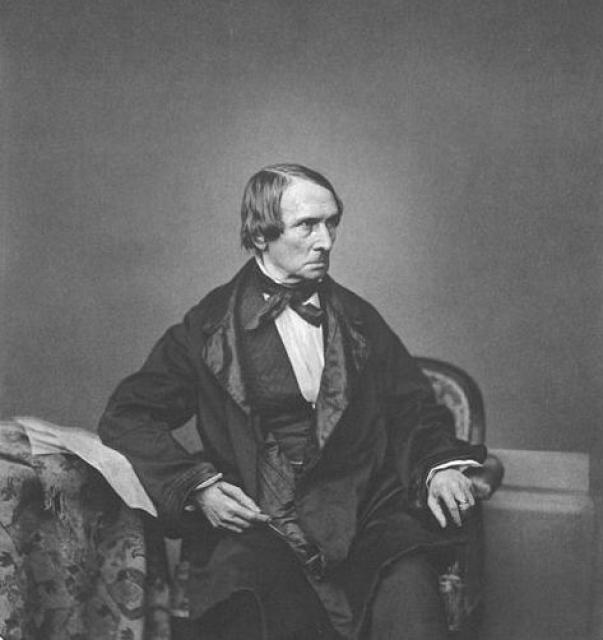
Peter Josef von Cornelius was a German artist and the nephew of composer Peter Cornelius. Born to the curator of the Düsseldorf Picture Gallery, Cornelius became an orphan at the age of 15 and faced very difficult circumstances. However, he managed to overcome them and began working on frescoes for local churches. One of his notable works is the fresco in the Church of St. Quirinus in Neuss.
In 1811, Cornelius embarked on a trip to Rome, where he joined a society of German artists that included Overbeck, Pforr, and others. This community adopted the name "The Brotherhood of St. Luke" and became known as the "Nazarenes" in the history of German painting. During his time in Rome, Cornelius, along with other Nazarenes, participated in the fresco painting of the home of the Prussian consul in Rome, Bartoldi (1816-1819), and also worked on illustrations for the "Song of the Nibelungs".
In the 1820s, Cornelius primarily resided in Munich by invitation of Ludwig I of Bavaria. He painted court portraits and, after 1825, became the head of the local Academy of Fine Arts. He decorated several churches in Munich, as well as the Glyptothek building (the frescoes were lost in World War II) and the Pinakothek.
In 1840, Cornelius moved to Berlin. His last work, dating to the 1840s, consisted of impressive sketches for the decoration of the royal burial chapel inspired by Dürer's motifs. His frescoes depicting ancient subjects in the Glyptothek (1820-1830) and the "Last Judgment" in the Church of St. Ludwig (1836-1840) became the most characteristic works of German academic art of that period and served as models for the artistic youth of Germany.