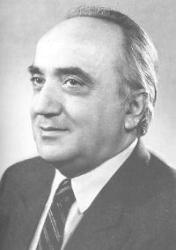
Richard Cripps
 Great Britain
- Early Life and Political Career
- Diplomatic Career
- Academic and Political Roles
- Labour Government and Legacy
- Later Life and Death
Early Life and Political Career
Sir Stafford Cripps was born in 1889 in London, England. His mother was the niece of Beatrice Webb, a renowned social reformer. Cripps attended Winchester College and University College London, where he studied law and economics. In 1930, he joined the Labour Party and quickly rose through its ranks. He served on the party's Executive Committee from 1934 to 1935 and was elected as a member of Parliament in 1931.
Diplomatic Career
During World War II, Cripps was appointed as British Ambassador to the Soviet Union from 1940 to 1942. He played a key role in securing Soviet support for the Allied forces and signed the Anglo-Soviet Agreement on joint action against Germany in 1941. However, his request for special powers was denied by the Soviet government.
Academic and Political Roles
After his diplomatic service, Cripps became the rector of the University of Aberdeen from 1942 to 1945. In the coalition government led by Winston Churchill, he served as Leader of the House of Commons in 1942.
Labour Government and Legacy
In 1945, Cripps was elected to the Labour government led by Clement Attlee. He held various ministerial positions, including President of the Board of Trade, Minister of Economic Affairs, and Chancellor of the Exchequer. His economic policies, known as "Crippsian austerity," were designed to rebuild the British economy after the war. However, his ill health forced him to resign as Chancellor of the Exchequer in 1950.
Later Life and Death
Cripps retired from politics in 1950 and died in 1952. He is remembered as a dedicated politician who played a significant role in British history, particularly during the Second World War and the post-war era.