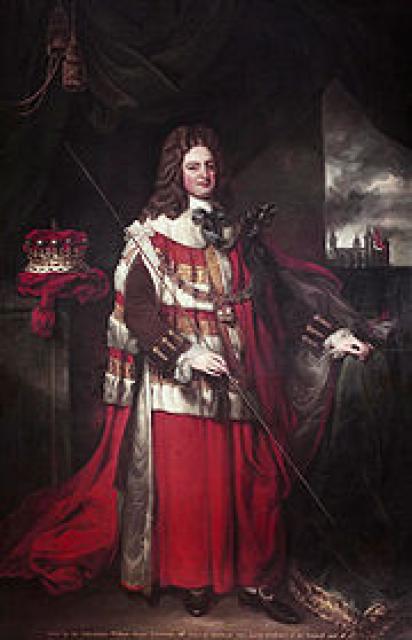
Robert Harly
 Great Britain
- Robert Harley, Earl of Oxford: A Statesman of Intrigue and Influence
- Rise to Prominence in the House of Commons
- Alliance with Godolphin and Entry into the Ministry
- Intrigues for Royal Favor
- Prime Minister and Peace with France
- Friendship and Rivalry with Bolingbroke
- Accusations and Fall from Grace
- Legacy
Robert Harley, Earl of Oxford: A Statesman of Intrigue and Influence
Early Life and Political AffiliationRobert Harley was born in 1661 into a prominent family with strong Whig connections. However, after the Glorious Revolution of 1688, Harley's father raised a cavalry troop in support of William III, foreshadowing his future shift in political allegiance.
Rise to Prominence in the House of Commons
Elected to the House of Commons in 1689, Harley initially aligned with the Whigs but gradually gravitated towards the Tories. By 1698, he had emerged as a key figure, replacing Montague as leader of the House. In 1701, he was elected Speaker, demonstrating his mastery of parliamentary procedure.
Alliance with Godolphin and Entry into the Ministry
Harley joined Godolphin's ministry in 1704, where he assumed control of foreign affairs. Initially considered a moderate Tory, he began to distance himself from his colleagues as Godolphin and Marlborough leaned towards the Whigs.
Intrigues for Royal Favor
Harley pursued a strategy of courtly intrigue to gain the favor of Queen Anne. His efforts, combined with the growing unpopularity of the Whigs, culminated in his return to the Cabinet as Chancellor of the Exchequer in 1710.
Prime Minister and Peace with France
In 1711, Harley was appointed Lord Treasurer, effectively becoming Prime Minister. He negotiated the Treaty of Utrecht with France, which sparked opposition from the Whigs in the House of Lords. Harley countered this by creating 12 new peers, ensuring the passage of the treaty.
Friendship and Rivalry with Bolingbroke
Harley's partnership with Henry St. John, Viscount Bolingbroke, initially strengthened the ministry. However, their friendship soured, and Harley lost Anne's trust. Shortly before her death, he surrendered the Lord Treasurer's staff to Bolingbroke.
Accusations and Fall from Grace
With the accession of George I, Harley was impeached by the House of Commons for treasonable offenses. He was imprisoned in the Tower of London for nearly two years. After his release, he remained in the House of Lords but played no significant political role.
Legacy
Harley remained a close friend of Jonathan Swift. He and his son were passionate bibliophiles, amassing a vast collection of manuscripts and books. This collection eventually became part of the British Library's national heritage.