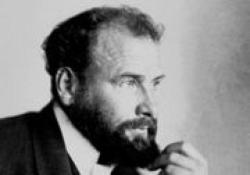
Sebastiano Richi
 Italy
Italy- Early Life and Training
- Artistic Influences
- Return to Venice
- Two Artistic Styles
- Masterpieces
- Influence and Legacy
Early Life and Training
Sebastiano Ricci, an Italian painter, was born in Belluno, a region under Venetian rule since the 15th century. He apprenticed as an artist in Venice under Sebastiano Mazzoni and Federico Cervelli, a minor Milanese master. Ricci then honed his skills in Bologna under Giovanni Gioseffo del Sole and in Rome under Luca Giordano, who greatly influenced his work.
Artistic Influences
During his extensive travels, Ricci encountered various artistic styles and influences. In Bologna, he studied the works of Guido Reni, whose classicism influenced his early work. In Rome, under Giordano, he absorbed the Baroque style with its dramatic lighting and illusionistic effects.
In Milan, the dynamic and expressive paintings of Alessandro Magnasco left an imprint on his art, particularly in his use of rapid, fluid brushstrokes. In Northern Europe, Rubens's voluptuous and vibrant women inspired Ricci, while in France, he encountered the emerging Rococo style of Antoine Watteau.
Return to Venice
After spending years abroad, Ricci returned to Venice in 1717, where he was warmly welcomed and highly acclaimed. His mature style reflected the complex interplay of influences he had encountered during his travels.
Two Artistic Styles
Ricci's oeuvre can be divided into two distinct styles:- Serene and Classical:Paintings characterized by a limited number of figures, a slow-paced narrative, and influences from Renaissance art.
- Dynamic and Baroque:Works featuring numerous figures in energetic movement, often depicted in celestial settings with clouds and light effects.
Masterpieces
One of Ricci's most celebrated frescoes is "Saint Gregory Releasing Souls from Purgatory" (1722-1724) in the Church of San Alessandro della Croce in Bergamo. The painting depicts a dynamic scene of salvation, with souls ascending to heaven while Pope Gregory and other saints witness the miracle.
Another notable work is the preparatory sketch for the altarpiece "Assumption of the Virgin" (1731) for Vienna's Karlskirche. The sketch, now in the Budapest Museum of Fine Arts, demonstrates Ricci's mastery of light and motion, capturing the moment when angels fervently assist the Virgin's ascent.
Influence and Legacy
Sebastiano Ricci's innovative style played a pivotal role in the development of European art in the 18th century. His monumental frescoes in Florence, such as those in the Palazzo Marucelli (1700-1707), inspired Giovanni Battista Tiepolo and influenced French painters like François Boucher.
Ricci's dynamic and uplifting art continues to captivate audiences, demonstrating his exceptional skill in rendering complex compositions, masterful brushwork, and a vibrant palette that celebrates the joy and lightness of human existence.