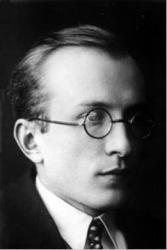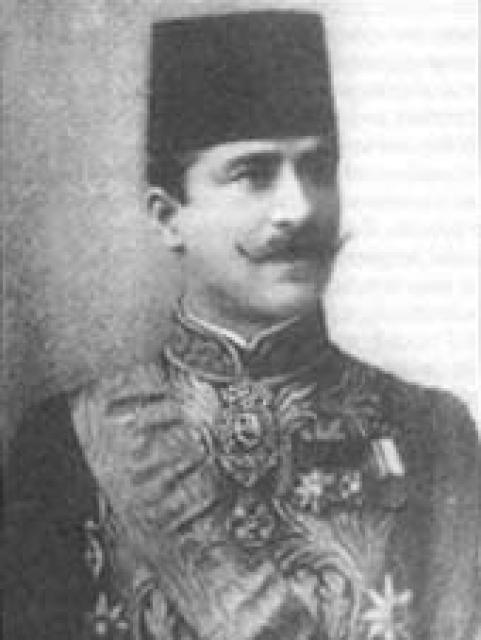
Sergey Shapshal
- Early Life and Education
- Time in Persia and Relationship with Shah
- Return to Russia and Religious Leadership
- Exile and Return to Gaham Position
- Nazi Era and Protection of Karaites
- Post-War Career and Karaite Legacy
- Legacy and Burial
Early Life and Education
Sergei Markovich Shapshal, a prominent Karaite philologist and orientalist, was born into a family of horticulturists. He initially attended the Okhtensky Craft School before enrolling in high school in Saint Petersburg in 1884. Upon graduating in 1894, he pursued his passion for Oriental languages at Saint Petersburg University. He completed his studies in 1899 and remained at the university as a research fellow.
Time in Persia and Relationship with Shah
From 1901 to 1908, Shapshal traveled to Iran, where he studied Azerbaijani and Persian languages. He taught Russian and general education subjects in Tabriz and developed a close relationship with Prince Mohammed-Ali, who later became the Shah. Shapshal's influence on the Shah proved significant, as he advised him on important matters during his reign.
Return to Russia and Religious Leadership
Upon his return to Russia, Shapshal worked as a lecturer in Turkish at Saint Petersburg University and a translator of Oriental languages for the Ministry of Foreign Affairs. In 1915, he was elected as the Spiritual Head (Gaham) of the Karaite communities in Taurida and Odessa, based in Yevpatoria.
Exile and Return to Gaham Position
Following the Russian Revolution, Shapshal fled Crimea in 1919 and eventually settled in Istanbul, Turkey, where he worked as a bank translator. In 1928, he was elected as Gaham of Karaite communities in Poland and Lithuania. He resigned from this position in 1940 after the Soviet Union annexed those territories. However, during the German occupation, he resumed his duties as Gaham de facto.
Nazi Era and Protection of Karaites
In 1939, Shapshal petitioned the German Ministry of the Interior to determine the ethnic origins of Karaites. This request was carefully reviewed by the Nazi administration, which ultimately classified Karaites as non-Jewish. As a result, they were spared during the Holocaust.
Post-War Career and Karaite Legacy
After the war, Shapshal renounced his role as Gaham and became a research fellow at the Institute of History of the Lithuanian Academy of Sciences. Together with Polish Orientalists, he compiled a trilingual "Karaite-Russian-Polish Dictionary," which was published in Moscow in 1974.
Shapshal is known for his controversial theory on the Altaic-Turkic origins of Karaites and the pagan roots of their religious beliefs. His collection of Karaite artifacts and antiquities, which he initiated the establishment of in Trakai, remains a valuable source for studying Karaite history and culture.
Legacy and Burial
Sergei Markovich Shapshal passed away and is buried in the Karaite cemetery in Vilnius, Lithuania. His contributions to the preservation and understanding of Karaite history, language, and culture continue to be recognized and studied.