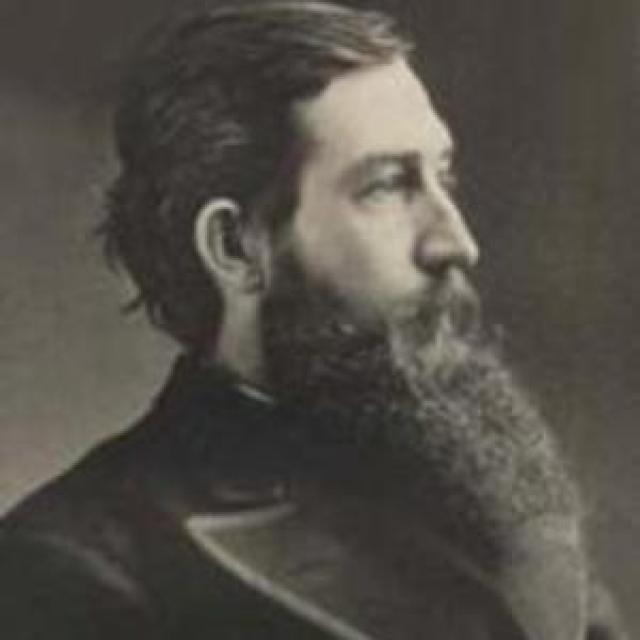
Sidney Lanier
 USA
USA- Early Life and Education
- Civil War and Imprisonment
- Post-War Career
- Musical Journey and Poetry
- Late Years and Academic Work
- Death and Legacy
Early Life and Education
Sidney Clopton Lanier was born on February 3, 1842, in Macon, Georgia. His ancestry was predominantly English, with distant French Huguenot roots tracing back to the 16th century. From a young age, Lanier exhibited a passion for music, particularly the flute. He attended Oglethorpe University, where he became a member of the Sigma Alpha Epsilon fraternity, and graduated shortly before the outbreak of the American Civil War.
Civil War and Imprisonment
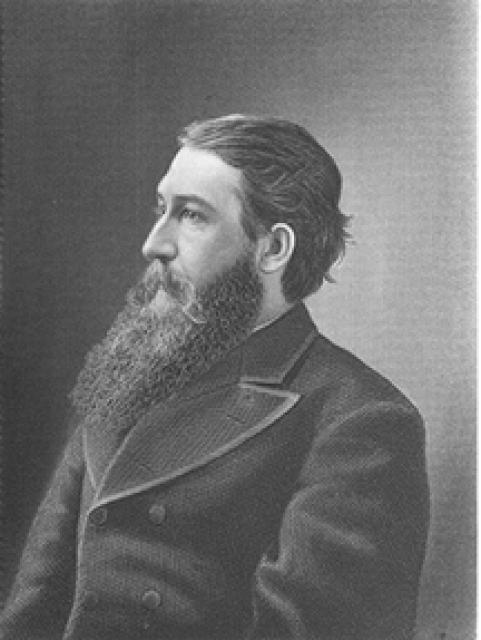
During the war, Lanier served in the Confederate signal corps, primarily in coastal Virginia. He also sailed as a blockade runner with his brother Clifford. In 1864, one of their ships was captured by Union forces. Refusing to follow British officers' advice to disguise himself as one of them, Lanier was taken prisoner. Held at Point Lookout prison in Maryland, he contracted tuberculosis, a condition that would plague him for the rest of his life.
Post-War Career
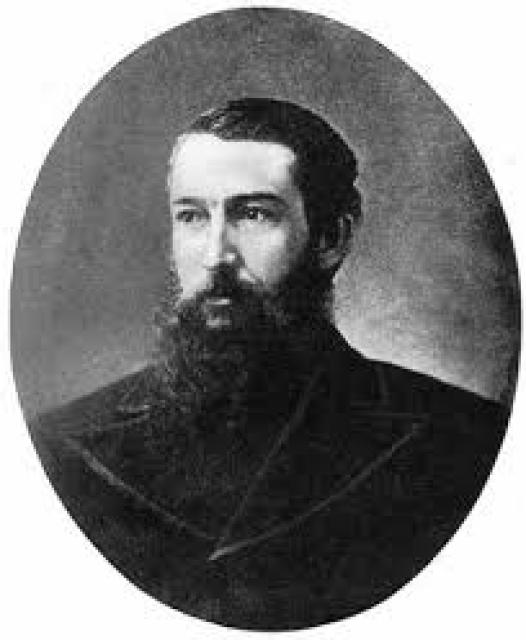
After the war, Lanier briefly taught before moving to Montgomery, Alabama, where he worked as a hotel clerk and performed as a musician. He wrote his only novel, "Tiger Lilies" (1867), while living in Alabama. In 1867, he moved to Prattville, where he taught and served as principal. The same year, he married Mary Day and returned to his hometown, where he joined his father's law firm. For several years, Lanier practiced law and wrote short poems using dialects of the white and black populations of the Reconstruction South.
Musical Journey and Poetry
Lanier's musical talent fully emerged during a trip to Texas, where he decided to pursue a career as a professional flutist in the Northeast. He failed to secure a position in New York City, Philadelphia, or Boston, but eventually joined the newly formed Peabody Orchestra in Baltimore. Despite lacking formal music training, Lanier quickly rose to the position of principal flutist. He composed his signature piece, "Blackbirds," which imitated the song of those birds. To support his wife and three children, Lanier wrote poetry that appeared in various magazines. His most renowned poems include "Corn" (1875), "The Symphony" (1875), "Centennial Meditation" (1876), "The Song of the Chattahoochee" (1877), "The Marshes of Glynn" (1878), and "Sunrise" (1881).
Late Years and Academic Work
The latter two poems are often considered his greatest works and form part of an unfinished collection of nature lyrics known as "Hymns of the Marshes," which depicts the vast, open salt marshes of Glynn County on the Georgia coast. The longest bridge in Glynn County is named in Lanier's honor. In his later years, Lanier continued his studies, taught, and eventually became a lecturer at Johns Hopkins University in Baltimore, specializing in the works of English novelists, William Shakespeare, Geoffrey Chaucer, and other authors of the Middle Ages and Elizabethan era. He published a collection of lectures titled "The English Novel" posthumously in 1883 and, in 1880, his book "The Science of English Verse," which introduced his theory of the relationship between musical notation and poetic meter.
Death and Legacy
Lanier died of complications from tuberculosis on September 7, 1881, near Lynn, North Carolina. He was only 39 years old. He was buried in Baltimore's Green Mount Cemetery. Lanier's theory of connecting musical notation to poetic meter, what he called the "science of verse," gave him the freedom he sought in his writing. He developed a unique style of logaedic verse (based on a dactylic foot), influenced by his love of Anglo-Saxon poets. Some of his greatest poems, including "Revenge of Hamish," "The Marshes of Glynn," and "Sunrise," were written in this meter. In Lanier's hands, logaedic dactylic verse produced a free, almost prose-like form that was highly praised by Henry Wadsworth Longfellow, Charlotte Cushman, and other prominent poets and critics of the time. A similar style of verse was independently developed around the same time by the British poet Gerard Manley Hopkins, though there is no evidence that they were aware of each other's work or even met.




