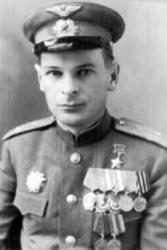
Vladimir Govorov
 Russia
- Early Life and Family
- Childhood Memories and Aspiration
- Military Career
- Command of the Moscow Military District
- Commander of the Far East Forces
- Deputy Minister of Defense
- Head of Civil Defense
- Retirement and Post-Military Activities
- International Leadership
- Awards and Honors
- Twice Hero of the Soviet Union
- Order of Friendship (1995)
Vladimir Leonidovich Govorov: A Distinguished Life in the Russian Military
Early Life and Family
Vladimir Leonidovich Govorov was born on October 18, 1924, in Odessa, Ukraine. His father, Leonid Alexandrovich Govorov, was a renowned Marshal of the Soviet Union and a Hero of the Soviet Union. His mother, Lidia Ivanovna, played a significant role in his upbringing. Vladimir had a brother, Sergei, and a son, also named Leonid, who pursued a career in science and technology.
Childhood Memories and Aspiration
As a child, Vladimir cherished the time he spent with his father, who dedicated himself to his son's education and upbringing. Despite the turmoil of the Soviet-Finnish War in 1939, during which his father served on the front lines, he maintained a close connection with his son, often providing guidance and support over letters.
In 1938, at the age of 14, Vladimir embarked on a daring adventure with his friend Sergei Kushchev. Inspired by the Spanish Civil War, they attempted to travel to Barcelona to join the Republican forces. However, their plan was intercepted, and Vladimir returned home to face his father's stern admonition. This incident marked a turning point in his life, as his father emphasized the importance of responsibility, maturity, and independent thinking.
Military Career
With the outbreak of World War II, Vladimir's father, then commander of the Leningrad Front, played a pivotal role in shaping his military career. After graduating from accelerated artillery courses in 1942, Vladimir served as a fire platoon commander and ended the war as a commander of an artillery battery, earning the Order of the Patriotic War, 2nd degree.
Post-war, Vladimir continued his education, graduating from the Higher Artillery Officers' School and serving as commander of an artillery division. Recognizing his potential, the Soviet authorities sent him to the prestigious Frunze Military Academy in 1946, where he excelled and graduated in 1949.
Vladimir's military career progressed steadily through various commands and appointments. He served as deputy commander of a mechanized regiment and then as commander of a regiment within the 11th Army, under the tutelage of General-Colonel Pyotr Kirillovich Koshevoy, who became a mentor in his professional growth.
In 1956, Vladimir was appointed chief of staff of a division, and in 1958, he was promoted to colonel and sent to command a division within the Group of Soviet Forces in Germany. His division played a crucial role in safeguarding bridges and borders in the region, demonstrating his ability to handle tense situations.
In 1963, Vladimir graduated with distinction from the Military Academy of the General Staff of the Armed Forces of the USSR and was appointed chief of staff of the 2nd Guards Tank Army. In 1967, he became the army's commander, reuniting with his former mentor, Marshal of the Soviet Union Ivan Stepanovich Konev.
Vladimir's rise continued with his appointment as First Deputy Commander of the Group of Soviet Forces in Germany in 1969. Two years later, he took command of the Baltic Military District, where he established strong relationships with the first secretaries of the Communist Party of Lithuania, Latvia, and Estonia, particularly with Antanas Sniečkus, who left a lasting impression on him as a wise and thoughtful leader.
In 1972, Vladimir was appointed to one of the most prestigious positions in the Soviet military, as commander of the Moscow Military District. He faced a daunting task almost immediately, as a series of devastating forest fires threatened to become a national disaster. Vladimir coordinated the efforts of various military and civilian organizations to contain and extinguish the blazes, showcasing his crisis management skills.
Command of the Moscow Military District
Vladimir's tenure as commander of the Moscow Military District spanned nine years, a period marked by significant achievements. He oversaw nine military parades on Red Square, including the memorable 55th anniversary parade in 1972. He also played a key role in ensuring the security and smooth functioning of the capital, which hosted high-ranking government officials, foreign dignitaries, and international events.
Commander of the Far East Forces
In December 1980, Vladimir was promoted to commander of the Far East Forces, a colossal military command encompassing the vast territory from the Pacific Fleet to the Mongolian border. He coordinated interactions with several countries, including Vietnam, Kampuchea, Laos, and Mongolia, and oversaw large-scale joint military exercises.
Deputy Minister of Defense
In 1984, Vladimir was recalled to Moscow to become the Deputy Minister of Defense and Chief Inspector of the Ministry of Defense of the USSR, a highly influential position. Recognition for his decades of military service culminated in his being awarded the title of Hero of the Soviet Union in the same year.
Head of Civil Defense
In 1986, shortly after the Chernobyl disaster, Vladimir was appointed Head of Civil Defense of the USSR while retaining his position as Deputy Minister of Defense. He swiftly implemented measures to mitigate the catastrophic consequences of the nuclear explosion, overseeing the evacuation and decontamination of affected areas.
Vladimir's tenure as Head of Civil Defense coincided with a series of other major incidents, including the earthquake in Armenia, an explosion in Arzamas, and a train crash near Ufa. These events reinforced his belief that the civil defense system needed a fundamental overhaul to address the growing threats of peacetime emergencies.
Retirement and Post-Military Activities
After a distinguished military career, Vladimir retired in 1992 with the rank of General of the Army. He remained active, serving as Chairman of the All-Russian Committee of the Order of the Patriotic War, First Degree, Veterans of War. He initiated innovative programs to revitalize the organization, organizing interregional conferences to address the social challenges faced by veterans.
In 1995, Vladimir played a pivotal role in leading the jubilee parade of veterans. He became co-chairman of the Russian Organizing Committee for the 55th Anniversary of Victory in the Great Patriotic War and held several other prominent positions in various veteran organizations.
International Leadership
Vladimir actively participated in international affairs, establishing himself as a leading figure in the global veteran movement. He was elected Vice-President of the World Federation of War Veterans, the first non-American to hold the position. He represented the organization at high-level international events and fostered close ties with national veteran organizations in over 40 countries.
Awards and Honors
Throughout his illustrious career, Vladimir Leonidovich Govorov received numerous awards and honors:
Twice Hero of the Soviet Union
Two Orders of LeninTwo Orders of the Red Banner
Two Orders of the Patriotic War, 2nd degree (1944) and 1st degree (1995)
Two Orders of "For Service to the Homeland in the Armed Forces of the USSR", 3rd degree (1975) and 2nd degree (1983)
Order of Friendship (1995)
Five foreign orders27 medals
Legacy
Vladimir Leonidovich Govorov, who passed away in 2006, left behind a legacy of military distinction, leadership, and service to his country. His contributions to the development of the Soviet Armed Forces and his unwavering dedication to veterans' affairs continue to be recognized and celebrated.