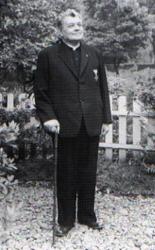
Walter Mixa
 Germany
- From Silesia to the Priesthood
- A Bishop in Eichstätt and Augsburg
- The 2010 Resignation
- Retirement and Legacy
Walter Mixa’s career carried him from parish life and theological teaching to the leadership of two German Catholic dioceses and the military ordinariate. Born in Upper Silesia during the Second World War, he became a priest in 1970 and later served as bishop of Eichstätt and Augsburg. His rise through church leadership ended abruptly in 2010, when Pope Benedict XVI accepted his resignation amid scrutiny over his treatment of children at a home where he had served as a priest and separate allegations that he denied.
From Silesia to the Priesthood
Mixa was born on April 25, 1941, in Königshütte, then part of Upper Silesia. In 1945, his family fled their home and settled in Heidenheim an der Brenz in southwestern Germany. He completed his secondary education at a school for late vocations before studying philosophy and theology in Dillingen and Fribourg, Switzerland.
Ordained for the Diocese of Augsburg in 1970, he continued theological studies and earned a doctorate at the University of Augsburg. He also taught religion at secondary schools. In 1975, he became parish priest of St. Jakob in Schrobenhausen and a regional dean, roles that placed him at the center of pastoral life in the area for two decades.
A Bishop in Eichstätt and Augsburg
Pope John Paul II appointed Mixa bishop of Eichstätt in 1996; he was consecrated that March. In addition to leading the diocese, he served as grand chancellor of the Catholic University of Eichstätt-Ingolstadt and held positions on several committees of the German Bishops’ Conference. In 2000, he was appointed Catholic military bishop for Germany’s armed forces.
In July 2005, Pope Benedict XVI named him bishop of Augsburg. Mixa was known as a socially conservative voice in the German church, speaking publicly on family policy and other cultural debates. For a time, his career appeared to follow a steady path through important diocesan and national roles.
The 2010 Resignation
That trajectory changed in spring 2010, when former residents of a children’s home near Schrobenhausen accused Mixa of physically abusing them while he was a priest. He initially denied hitting children, then acknowledged that he might have boxed their ears. A special investigator’s report described physical abuse of children at the home and also identified financial irregularities there during the same period.
Separate allegations of sexual abuse relating to his years as bishop of Eichstätt were also reported in 2010. Mixa denied sexually abusing anyone. German prosecutors closed their investigation in May, saying the available evidence did not establish a crime of sexual abuse. On May 8, Pope Benedict accepted Mixa’s resignation as bishop of Augsburg; he also ceased to serve as military bishop. The resignation followed the allegations of physical abuse and the wider crisis of confidence surrounding his leadership.
Retirement and Legacy
Since retiring, Mixa has remained a bishop emeritus and has continued occasional pastoral work. The Diocese of Augsburg reported in 2016 that he lived in Gunzenheim, near Wemding, and assisted with pastoral care; in 2012, he had been appointed to the Pontifical Council for Health Care Ministry.
His legacy is consequently difficult to separate from the events that brought his episcopal career to a close. He held senior positions in German Catholic life for more than a decade, with a long earlier record as teacher and parish priest. Yet the abuse findings and the allegations investigated in 2010 became an enduring part of the public account of his time in office, underscoring the serious responsibilities attached to authority over children and other vulnerable people.