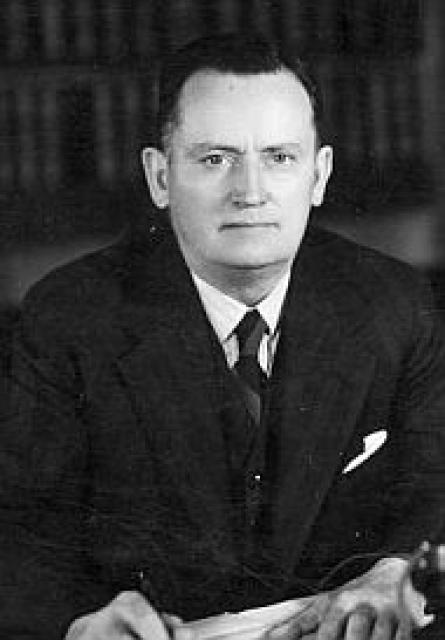
Francis Michael Forde
 Australia
Biography of Francis Michael Forde
Francis Michael Forde was an Australian political figure and the 15th Prime Minister of Australia. He was born in Mitchell, Queensland, into a family of cattle farmers. Forde received his education at St. Mary's College in Toowoomba and became a teacher. Settling in Rockhampton, he joined the Labor Party and workers' education groups.
In 1917, Forde was elected to the Queensland Legislative Assembly as a member of the Labor Party, representing the electorate of Rockhampton. In 1922, he left this position and was elected to the Australian House of Representatives, representing the electorate of Capricornia. Shortly after, Forde made a career within the Labor Party.
After the Labor Party's victory in the 1929 elections, Forde became the Deputy Minister for Trade and Customs in James Scullin's government. In the final days of the cabinet, he became the Minister for Trade and Customs. As one of the oldest Labor Party members in parliament, he suffered defeat in the 1931 elections and became the Deputy Leader of the Opposition in 1932. He remains the only Deputy Leader of the Australian Labor Party from Queensland.
After Scullin resigned in 1935, Forde ran for the position of party leader but lost by one vote to John Curtin, mostly due to his support for Scullin's economic policies.
Forde was a loyal deputy, and in 1941, when the Labor Party returned to power, he was appointed as the Minister for Defence, a highly important position during the war. After the death of Curtin on July 5, 1945, Forde was sworn in as the new Prime Minister on July 6, as the Deputy Leader of the party. However, he lost the leadership election on July 13 to Ben Chifley and Norman Makin. Chifley emerged as the winner, and Forde was once again elected as the Deputy Leader of the party.
As the Minister for Defence, Forde faced strong criticism for the slow pace of demobilization. As a result, he lost his position after the 1946 elections, despite the Labor Party's convincing victory.


