Giulio Caccini
 Italy
Giulio Caccini helped reshape European vocal music at the moment opera was taking form. A celebrated singer and teacher at the Medici court in Florence, he championed a direct, expressive style in which music followed the movement of the words. His songs and operas helped turn that experiment into a lasting musical language.
Early Life and the Medici Court
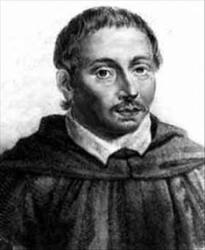
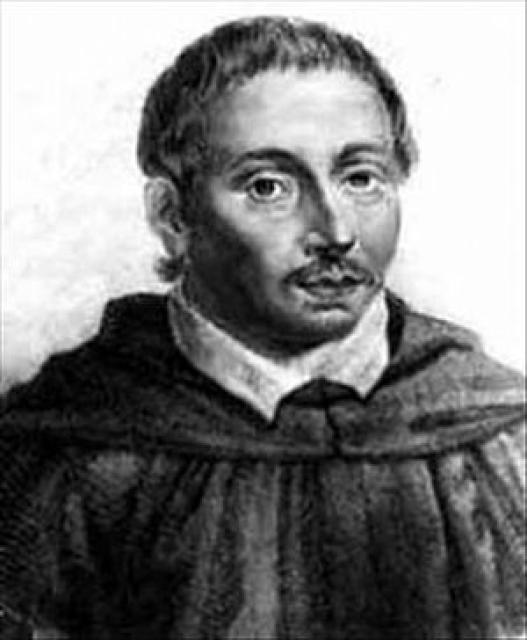
Caccini, also known as Giulio Romano, was born in or near Rome. Some reference works give October 8, 1551, while scholars have noted that surviving evidence leaves both his birthplace and birth year uncertain, often placing his birth around 1545–1550. He studied singing with Scipione della Palla and was brought to Florence as a young man. By the mid-1560s he was serving the Medici household as a singer and instrumentalist.
Florence was then a magnet for musicians, poets, and scholars exploring how music might recover the expressive force they associated with ancient Greek drama. Caccini joined the circle known as the Florentine Camerata, meeting at the home of Count Giovanni de’ Bardi. With Jacopo Peri, Vincenzo Galilei, and others, he developed a style that put a single vocal line and clear text at the center. This approach, known as monody, contrasted with the dense interweaving of Renaissance polyphony.
Songs and the Birth of Opera
Caccini’s collection Le nuove musiche, published in Florence around 1601–1602, became a landmark of the new style. Its solo madrigals and arias demonstrated expressive declamation, flexible rhythm, and ornamented singing. The volume’s preface also offered practical guidance for performers, making it influential as both music and a statement of vocal technique.
In 1600, Caccini contributed sections to Peri’s Euridice, staged for the Medici wedding festivities that year. The two composers were rivals, and Caccini soon published his own setting of the same story. His Euridice was performed in 1602 with members of his family among the singers. He also composed Il rapimento di Cefalo for the festivities; most of its music is lost, though its final chorus survives.
A Family of Musicians
Caccini trained many singers and performed with a family ensemble that included his wife and children. His daughters Francesca and Settimia became accomplished musicians in their own right. In 1604 the family traveled to France at the invitation of Marie de’ Medici and King Henry IV, performing for the royal court in Paris.
Caccini remained connected to Florence and Medici service until his death there on December 10, 1618. His legacy rests not on a single score but on the musical world he helped create: intimate solo song, expressive recitative, and a new kind of drama in which music made poetry speak.