Vladislav Kazenin
 Russia
- Early life and musical training
- A composer across genres
- Leadership and public service
- Honors and legacy
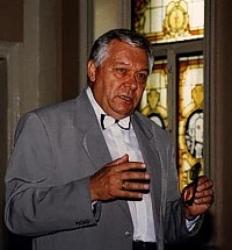
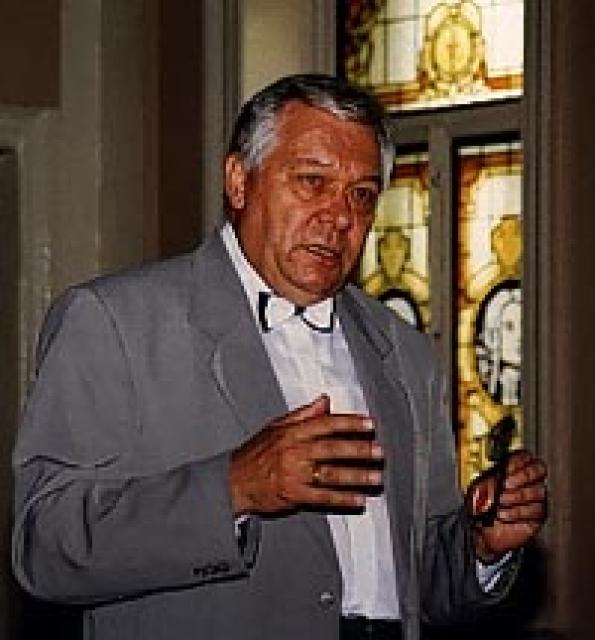
Vladislav Kazenin spent much of his life moving between two worlds: the composing room and the cultural institutions that shaped musical life across the Soviet Union and Russia. A versatile composer, he wrote for concert halls, theaters, films, and animated works. He was also a prominent arts organizer, serving as chair of the Union of Composers of Russia for nearly a quarter century.
Early life and musical training
Kazenin was born on 21 May 1937 in Kirov, then known as Vyatka, into a musical family. His father, Igor Kazenin, was a pianist and worked in music education and theater. Vladislav began piano lessons in childhood and made an early appearance as a performer. In 1947, the family moved to Sverdlovsk, now Yekaterinburg, where he continued his musical education.
After finishing school, Kazenin studied piano and composition at the Ural State Conservatory named for M. P. Mussorgsky. He graduated in 1961 and remained in Sverdlovsk, teaching and working in the musical life of the city. His early professional years combined the work of a composer with the day-to-day responsibilities of a teacher and arts organizer.
A composer across genres
Kazenin’s catalogue ranged widely: orchestral and chamber music, piano works, songs and romances, choral pieces, ballets, operettas, musicals, and scores for theater and screen. He had a particular affinity for musical theater, where he could combine lyrical writing, humor, and accessible storytelling. Works included the musical comedies *Paradise in a Shack*, *I Believe You*, and *When a Clown Falls in Love*, as well as ballets and concert pieces.
His film and television work brought his music to a much broader audience. He composed for feature films and animated productions, with the score for the popular television comedy *Hello, I’m Your Aunt!* among his best-known screen work. He also wrote for films such as *About Vitya, Masha, and the Marines* and *The Malachite Casket*. The screen projects complemented rather than replaced his concert writing, and his output moved easily between popular forms and more formal musical settings.
Leadership and public service
In 1968, Kazenin moved to Moscow and worked in the Union of Composers of the USSR, including as chief editor of its music-promotion bureau. His organizational work grew over the following decades. He served in leadership roles in Moscow and Russian composers’ organizations and became deputy minister of culture of the USSR in 1987, remaining in the post until 1990.
That same year he took the helm of the Union of Composers of Russia. He led the organization until his death in 2014, guiding it through the end of the Soviet period and the creation of a new Russian cultural landscape. The union credits his efforts and authority with helping establish new regional composers’ organizations and strengthen connections among musicians, concert institutions, and educational centers. He also supported festivals and projects intended to bring live music to audiences beyond Moscow.
Honors and legacy
Kazenin received the title Honored Artist of the RSFSR in 1980 and was named People’s Artist of Russia in 1996. He received the State Prize of the Russian Federation in 2003 for the “New Itinerants” music academy program, which brought performances and educational events to cities around the country. Other honors included state decorations and recognition as an honorary citizen of Kirov.
He died in Moscow on 17 February 2014, aged 76. Kazenin’s legacy rests both on an unusually broad creative catalogue and on the institutions he helped build. His music could be heard in a concert hall, on a theater stage, in a television comedy, or in an animated film; his long service in composers’ organizations helped keep musical life connected across Russia’s regions.