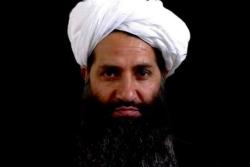
Hafizullah Amin
 Afghanistan
- Early Life and Education
- Political Career and Rise to Power
- Presidency and Internal Conflict
- Foreign Relations and International Pressure
- Assassination and Legacy
Early Life and Education
Hafizullah Aminwas born on August 1, 1929, in the province of Paghman near Kabul, Afghanistan. He belonged to the Kharoti tribe of the Pashtun ethnic group. Amin received his early education from the Kabul Pedagogical Institute and later earned a Bachelor of Science degree in physics and mathematics from Kabul University.
Political Career and Rise to Power
In 1957, Amin received a scholarship to pursue further studies at Columbia University in New York, where he obtained a Master's degree. While in the United States, he allegedly established ties with the CIA. Amin returned to Afghanistan in 1965 and became the director of the Ibn Sina High School in Kabul.
Amin's political involvement began in the late 1960s. He joined the People's Democratic Party of Afghanistan (PDPA) and gradually rose through the ranks. Following the Saur Revolution in 1978, he served as Foreign Minister and Defense Minister before becoming Prime Minister in 1979.
Presidency and Internal Conflict
In September 1979, Amin became Secretary-General of the PDPA and Chairman of the Revolutionary Council, effectively becoming the second President of Afghanistan. Amin's presidency was characterized by widespread political repression and human rights abuses. He intensified the campaign against dissidents and executed thousands of political prisoners.
Foreign Relations and International Pressure
Amin's foreign policy was marked by close ties with the Soviet Union. However, his alleged links to the CIA and his authoritarian rule drew strong criticism from the international community. The Soviet Union became increasingly concerned about Amin's erratic behavior and feared that Afghanistan might fall out of its sphere of influence.
Assassination and Legacy
On December 27, 1979, Soviet special forces stormed the presidential palace in Kabul, killing Amin and his son. The official Soviet account claimed that Amin was executed after a revolutionary court sentenced him to death. However, the exact circumstances of Amin's death remain disputed.
Amin's presidency is regarded as a dark chapter in Afghan history. His policies of repression and his alleged collaboration with foreign powers alienated him from the Afghan people and left a lasting legacy of mistrust and instability.