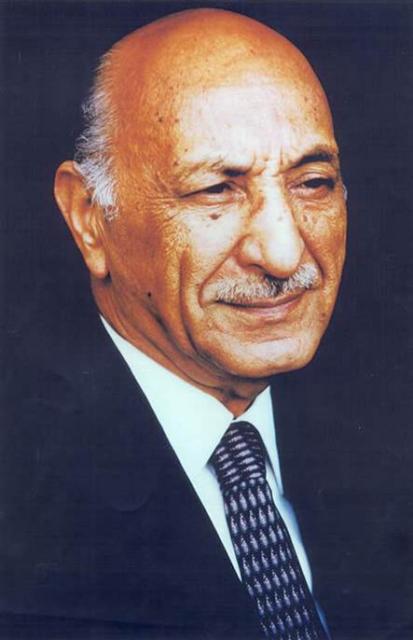
Muhammed Zahir-Shah
 Afghanistan
- Biography of Muhammad Zahir Shah
- Early Life and Heritage
- Educational Background and Ascension to the Throne
- Reign and Reforms
Biography of Muhammad Zahir Shah
Muhammad Zahir Shah was the King (Padishah) of Afghanistan from November 8, 1933, to July 17, 1973. He was a reformist who ruled the country for 40 years until his cousin, Muhammad Daoud, overthrew him in July 1973. Zahir Shah was able to return from exile to his homeland only in 2002.
Early Life and Heritage
Muhammad Zahir Shah belonged to the royal Pashtun Barakzai dynasty of the Durrani tribe. His lineage can be traced back to Sardar Muhammad Khan Peshawari, a half-brother of Dost Mohammad Khan, who sold Peshawar for gold and allied with Rajit Khan against Dost Mohammad in Kabul. His great-grandfather, Yahya Khan, gained fame for mediating between Yakub Khan and Britain during the Gandamak negotiations. After signing the Gandamak Treaty, both Khans were forced to seek refuge in India, which was then a British colony.
Zahir Shah's Pashtun heritage, along with his initial commitment to the Persian language (Farsi), allowed him to balance the interests of the Pashtun majority and the Farsi-speaking elite of Afghan society for some time.
Educational Background and Ascension to the Throne
Zahir Shah was considered an enlightened, progressive, and highly educated monarch. He received a brilliant secular and military education in France and even became a French officer. In addition to his native Afghan (Pashto) language, he was fluent in Persian, English, French, and Italian. He ascended to the throne at the age of 19 after the assassination of his father, King Muhammad Nadir Shah, who was shot by a cadet standing in formation during a military school parade in Kabul. Zahir Shah had to interrupt his studies in France and assume the throne in 1933.
Reign and Reforms
During the first 20 years of his reign, the young Shah had to work alongside his more experienced relatives, including his three uncles who effectively governed the country. However, as he gained experience and authority, Zahir Shah began to take power into his own hands and implemented political and economic reforms that were not welcomed by everyone.
In 1964, King Zahir Shah issued a new constitution, aiming to promote the development of democracy and women's rights, which caused discontent among the conservative clergy. He also attempted an anti-Persian campaign to popularize the native Pashto language, which ended in failure. This campaign was part of his efforts to revive the past influence of the Pashtuns. During his reign, the Pashtuns held the majority in the government and parliament and enjoyed significant privileges compared to other ethnic groups, fueling anti-government sentiments and leading to the emergence of opposition parties and leaders such as Sitam Milli (led by Tahir Budaqsh) and the movement of Abdurrahman Mahmudi.
While some attribute to him the organization of assassination attempts and killings of religious leaders, such as Shiite leaders Said Ismail Balkhi and Mavlon Fayzani, many Afghans remember the years of his rule as the "golden age" of Afghanistan, characterized by relative stability and tranquility. During his reign, Zahir Shah invited foreign advisors into the government, established the first modern university, advocated for the abolition of the burqa worn by Afghan women, and gave women access to education and the right to vote. Members of the royal family were also deprived of the right to hold positions in the government. The country experienced a free press and an elected parliament during this period. He is considered an outstanding diplomat who skillfully balanced relations with Moscow and Washington, both of which sought dominance in Afghanistan during his rule. Zahir Shah also promoted cultural and trade relations between Afghanistan and Europe.