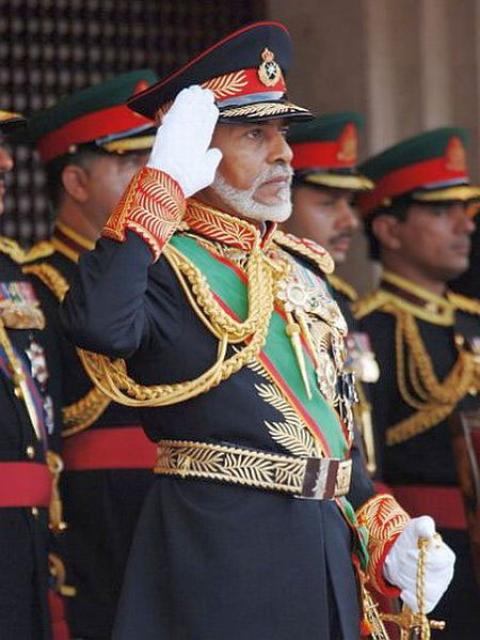
Kabus Said
 Oman
Oman- Biography of Sultan Qaboos bin Said
- Early Life and Rise to Power
- Reforms and Modernization
- International Relations
- Later Years
Biography of Sultan Qaboos bin Said
Sultan Qaboos bin Said was born on November 18, 1940, in Salalah, Oman. He was the only son of Sultan Said bin Taimur. He received his primary education in Salalah and then moved to the United Kingdom, where he completed his college education at Bury College and later joined the Royal Military Academy Sandhurst at the age of 20. After graduating from the academy, he served in a British infantry battalion in Germany before transitioning to staff work in the British army.
Early Life and Rise to Power
While under house arrest in Oman, Qaboos had the opportunity to meet with individual guests from the United Kingdom, with whom he conspired to overthrow his father. On July 23, 1970, a bloodless palace coup was successful, and Sultan Said abdicated in favor of his son, Qaboos bin Said, who ascended to the throne and also took on the positions of Prime Minister, Minister of Foreign Affairs, and Minister of Defense. In August of the same year, he proclaimed the unification of Oman, forming the Sultanate of Oman, which replaced the Sultanate of Muscat and Oman. In 1971, the Sultan changed his title from His Highness to His Majesty.
Reforms and Modernization
Sultan Qaboos initiated extensive reforms that encompassed all aspects of life in the Sultanate. He purged the administration of corrupt officials, established new ministries, and reorganized the local and central administration. The country was divided into 41 provinces, each led by a wali (governor) appointed by the Sultan, which undermined the influence of local sheikhs. The Sultan also focused on modernizing the armed forces, equipping them with modern tanks, aircraft, and naval vessels, while significantly increasing soldiers' and officers' salaries.
In terms of the economy, Sultan Qaboos implemented a policy of supporting private entrepreneurship. The main source of revenue for Oman was oil trade, and the Sultan owned most of the oil extraction and processing facilities, generating billions of dollars in income each year. However, instead of investing these funds in Western economies or heavy industry, he directed them towards creating a robust infrastructure, improving the standard of living, and developing other natural resources such as copper, chrome, coal, and asbestos.
Sultan Qaboos also invested heavily in education, healthcare, and housing for the Omani population. He constructed more than 500 schools, several top-notch hospitals, and made education and healthcare free for all Omanis. The Sultanate witnessed the development of modern roads, new residential areas, business centers, cinemas, banks, and supermarkets. The country's electrical transmission lines were expanded, and desert irrigation was initiated using artesian wells. Additionally, Sultan Qaboos implemented social programs to provide financial assistance to citizens for purchasing their own homes.
International Relations
Sultan Qaboos was one of the few Arab leaders to support the Camp David Accords in 1978, which aimed to provide limited self-governance to Palestinians in the West Bank and Gaza Strip. Oman has also supported U.S. efforts to resolve Arab-Israeli conflicts. In 1985, Oman and the United States signed an agreement for security collaboration, allowing the U.S. to station limited military forces in Oman and deploy troops during emergencies. Oman played a crucial role as a military base during the 1991 Gulf War.
Under Sultan Qaboos' leadership, Oman resolved border disputes with Yemen, Saudi Arabia, and the United Arab Emirates. In 1994, Oman opened a trade representative office for Israel in Muscat. Sultan Qaboos also established the Consultative Council in 1981, which later transformed into the Shura Council in 1991. In November 1996, he signed Oman's first Basic Law (Constitution), defining the Sultan's powers and the order of succession. The Constitution also established the Council of Oman as a representative and advisory body and acknowledged the basic rights of citizens.
Later Years
Sultan Qaboos married Sayyida Nawwal bint Tariq Al Said on March 22, 1976. They did not have any children. The Sultan's mother, Mazun Al Mashani, and his sister, Sayyida Umayma bint Said Al Said, hold significant influence within the ruling family.
Despite facing some challenges, Sultan Qaboos' reign was marked by significant progress and development in Oman. His dedication to modernization and social welfare transformed the country into a prosperous and forward-thinking nation. Sultan Qaboos bin Said passed away on January 10, 2020, after a long period of illness.


