Ladislaus Postumus
- Birth and Ancestry
- Civil War in Hungary
- Recognition in Bohemia and Continued Power Struggles
- Regency and the Death of Uladzlaus I of Hungary
- Reign in Hungary and Conflict with the Hunyadi Family
- Victory at Belgrade and the Death of Hunyadi
- Reign in Bohemia and Untimely Death
- Suspicions of Poisoning and Medical Evidence
- Failure of Central European Unification
- Marriage and Children
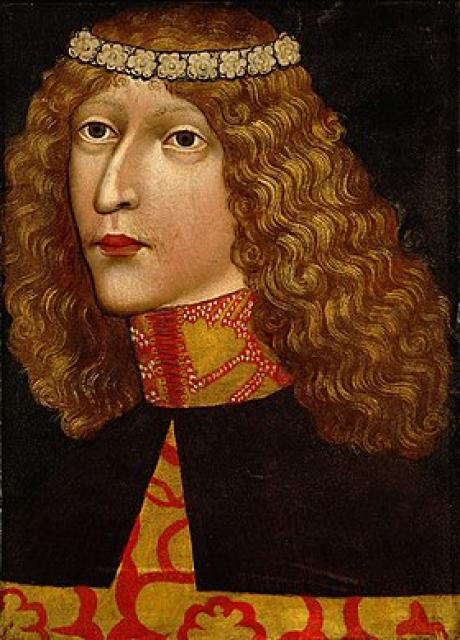
Ladislaus the Posthumous: A Turbulent Reign from Birth to an Early Death
Birth and Ancestry
Ladislaus the Posthumous was born in 1440, four months after the untimely death of his father, Emperor Albrecht II of Germany. As the only surviving son of Albrecht, Ladislaus inherited the Duchy of Austria. His mother, Elizabeth of Luxembourg, promptly arranged his coronation as King of Hungary, with the support of a pro-Habsburg faction.
Civil War in Hungary
However, most Hungarian nobles favored the Polish king, Władysław III, as their king. A civil war ensued, with the nobles supporting Władysław emerging victorious. Nevertheless, Frederick III of Austria managed to secure western Hungarian cities, and Jan Jiskra seized much of northern Hungary in Ladislaus's name.
Recognition in Bohemia and Continued Power Struggles
Ladislaus was recognized as King of Bohemia almost immediately, but the country was also embroiled in a power struggle between Catholic nobles and Hussite factions. Royal authority collapsed, and Frederick's attempts to establish his power in Ladislaus's name failed. In 1444, George of Poděbrady assumed leadership of the Hussite faction and consolidated his control over Bohemia.
Regency and the Death of Uladzlaus I of Hungary
In 1444, Hungary's king, Uladzlaus I, fell in battle. This sparked renewed power struggles. As a compromise, Ladislaus was recognized as king in 1445, on the condition that Frederick release him and return the Hungarian crown jewels. Frederick refused, leading to the election of John Hunyadi as Hungary's regent in 1446.
Reign in Hungary and Conflict with the Hunyadi Family
In 1453, the Hungarian Diet recognized Ladislaus as king. He was the first ruler since Albrecht II's death to be accepted by all factions. Despite his coronation, Ladislaus was just thirteen years old, and the actual power was wielded by Ulrik Cillei, a Slovenian count who opposed Hunyadi.
Victory at Belgrade and the Death of Hunyadi
Hunyadi continued his successful campaigns against the Ottomans and famously defeated them at the Battle of Belgrade in 1456. However, he died shortly thereafter. His elder son, Laszlo, accused Ulrik Cillei of treachery and murdered him. Despite the Habsburg acquisition of Cillei's vast estates, Ladislaus had Laszlo arrested and executed in early 1457. A revolt erupted in Hungary, forcing Ladislaus to flee to Prague.
Reign in Bohemia and Untimely Death
Ladislaus had been crowned King of Bohemia in 1453, but Poděbrady remained the de facto ruler. Poděbrady strengthened the central authority and suppressed noble rebellions. In 1457, Ladislaus returned to Prague to prepare for his marriage to Madeleine of Valois, daughter of King Charles VII of France. However, he suddenly fell ill and died within three days.
Suspicions of Poisoning and Medical Evidence
Rumors spread that Ladislaus had been poisoned, possibly by Poděbrady, who later became King of Bohemia. However, modern medical research suggests that Ladislaus died from leukemia, a disease unknown to medieval physicians. A contemporary account by Philippe de Commynes alleges that a woman poisoned him through an apple smeared with poison.
Failure of Central European Unification
Ladislaus's untimely death marked the failure of the first attempt to unify Central European states, initiated by Emperor Sigismund of Luxembourg. While the Habsburgs retained power in Austria, Hungary and Bohemia elected national kings, leading to the isolation of each state. Subsequent attempts at unification, such as by Matthias Corvinus of Hungary, were also cut short by premature deaths. The disunity in Central Europe had disastrous consequences, as the Habsburgs only achieved reunification in 1526, after the Ottoman conquest of Hungary.
Marriage and Children
Ladislaus the Posthumous never married or had children. His cousin, Frederick V, inherited Austria after his death. With the demise of Ladislaus, the Albertine line of the House of Habsburg ended, and the Austrian lands were once again united under a single ruler.