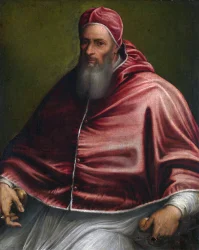
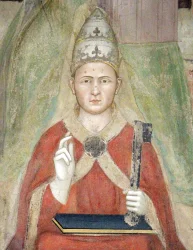
Paul IV
Gian Pietro Carafa became Pope Paul IV at an age when most men had long since left public life. His four-year pontificate, from 1555 to 1559, was brief but intense: he pushed for a more disciplined Catholic Church, strengthened the Roman Inquisition, and confronted Protestantism with uncompromising force. He also pursued a costly struggle against Spanish Habsburg power and imposed severe restrictions on Rome’s Jewish community. His legacy is therefore inseparable from both Counter-Reformation reform and coercion.
A reformer with a political edge
Born on June 28, 1476, into the aristocratic Carafa family near Benevento in southern Italy, Carafa entered church life with the advantages of education and influential relatives. He became bishop of Chieti, whose Latin name, Theate, gave the Theatines their name. In 1524, he and Gaetano da Thiene helped establish this new order of clerics, committed to spiritual discipline and reform. Carafa gave up several church offices to join the order, an early sign of the severity that would mark his public image.
His career also took him into diplomacy and the heart of papal administration. He served as a papal representative in Spain, where the reach of the Habsburg monarchy left a lasting impression on him. Pope Paul III made him a cardinal in 1536 and later appointed him archbishop of Naples. Carafa became one of the leading advocates of a forceful response to religious dissent. In 1542, he played a central role in organizing the Roman Inquisition, known as the Holy Office, to investigate suspected heresy.
The pope who would not compromise
Carafa was elected pope in May 1555, taking the name Paul IV. At about 79, he was among the oldest men ever elected to the office. He approached the papacy as a mission to discipline the Church and defend its authority. He pressed clergy to observe stricter standards, backed the suppression of writings deemed heretical, and gave inquisitorial proceedings greater weight. His determination helped shape the Catholic response to the Reformation, but it also made fear and punishment central features of his rule.
Paul’s religious program was entangled with European power politics. He sought to curb Spain’s dominance in Italy, especially its control over Naples, and in 1556 allied with France against the Habsburgs. The campaign went badly. Spanish forces entered papal territory, and in 1557 Paul accepted peace after military setbacks. The episode exposed the costs of his anti-Spanish ambitions and diverted energy from the reforms he had promised.
His leadership was also compromised by family favoritism. Paul elevated his nephew Carlo Carafa to the cardinalate and entrusted him with major responsibilities despite his limited church experience. Carlo became a powerful figure at court, where accusations of corruption and self-interest gathered around him. After the failed war, Paul removed him from influence and sent him away from Rome. The reversal did little to undo the damage nepotism had done to the pope’s reputation.
A harsh legacy in Rome
In July 1555, Paul issued the papal bull Cum nimis absurdum. It forced Rome’s Jewish residents into a segregated, walled district that became known as the Roman Ghetto and imposed restrictions on their movement, occupations, and daily life. The policy institutionalized discrimination and helped make Jewish existence in Rome more precarious. It remains one of the clearest examples of the harm inflicted by Paul’s rule.
Paul also pursued prominent religious figures he regarded as threats. Cardinal Giovanni Morone was imprisoned and investigated for heresy, though the case was not resolved before Paul’s death. Such actions demonstrated how readily the pope’s campaign for religious unity turned into repression, even within the upper ranks of the Church.
Paul IV died in Rome on August 18, 1559, after a pontificate of just over four years. Popular anger erupted after his death: crowds attacked symbols of his authority, including his statue. The reaction reflected the resentment created by his severity, political ventures, and inquisitorial policies. Yet his impact endured. He helped establish a more centralized and uncompromising system of Catholic discipline at a critical moment in European religious history. Remembering him fully means holding that reforming ambition alongside the persecution and political misjudgment through which he pursued it.