Cotton Mezer
 USA
- Early life and education
- Ministry and historical writing
- The Salem witch trials
- Inoculation and natural inquiry
- Later years and legacy
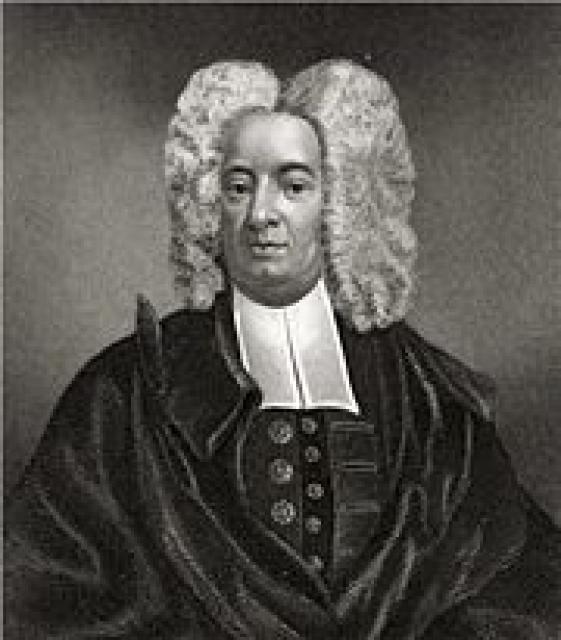
Cotton Mather (February 12, 1663–February 13, 1728) was a New England Puritan minister, prolific author, historian and early advocate of smallpox inoculation. A major religious and intellectual figure in colonial Boston, he wrote on theology, history, medicine and natural philosophy. His legacy remains contested: he defended the prosecution of alleged witches during the Salem crisis, while his campaign for inoculation helped introduce a preventive medical practice to colonial America.
Early life and education
Mather was born in Boston, Massachusetts Bay Colony, to Maria Cotton and Increase Mather, a leading Puritan minister who later served as president of Harvard College. He attended Boston Latin School and entered Harvard at a young age, graduating in 1678. He received a master’s degree in 1681.
In 1680 he began assisting his father at Boston’s Second Church, also known as the North Church. He was ordained in 1684 and remained a minister there for the rest of his life, first sharing the pulpit with his father and later leading the congregation. His preaching and writing reflected the Puritan belief that religious life, public conduct and the fate of the community were closely connected.
Ministry and historical writing
Mather became one of the most prolific writers in colonial New England, producing hundreds of books and pamphlets. His subjects ranged from sermons and devotional guidance to natural philosophy, medicine and biography. Among his best-known works is *Magnalia Christi Americana* (1702), a broad history of New England’s churches and leaders. It combined religious interpretation with accounts of the region’s settlement and development.
He was also a participant in the political and intellectual life of the colony. During the 1688 revolt against Governor Edmund Andros, Mather was among the Massachusetts leaders who opposed the governor’s rule. He served as a Harvard overseer and fellow, and worked to obtain support from the English benefactor Elihu Yale for the college in Connecticut that later took Yale’s name. In 1713 he was elected a Fellow of the Royal Society of London, recognition of his interest in scientific questions as well as his religious scholarship.
The Salem witch trials
Mather’s name is closely associated with the Salem witch trials of 1692. Although he was not a judge, his writings and advice influenced the religious discussion around the proceedings. In *The Wonders of the Invisible World* (1693), he defended the trials and published accounts of the cases, lending learned support to the belief that witchcraft posed a real danger.
The evidentiary role of spectral testimony—claims that an accused person’s spirit had appeared to harm someone—was disputed even among the period’s clergy. Mather urged caution about relying on such testimony alone, but his published work supported the prosecution and execution of accused people. His place in the episode is therefore both influential and troubling: his cautions did not amount to opposition to the trials, and his defense of the proceedings helped legitimize them.
Inoculation and natural inquiry
Mather also observed the natural world and followed developments in medicine. His enslaved African servant, known as Onesimus, told him about inoculation against smallpox, a practice Onesimus had experienced in Africa. During Boston’s severe smallpox outbreak in 1721, Mather urged physicians to use inoculation. Physician Zabdiel Boylston undertook the procedure, despite public opposition and professional controversy. The practice involved deliberate exposure to smallpox material and carried real risks, but it proved substantially less dangerous than contracting the disease naturally.
Mather’s role in promoting inoculation also depended on knowledge shared by an enslaved person whose contribution was often marginalized in contemporary accounts. His interests extended to botany: he described observations of different varieties of corn and early experiments involving plant hybridization in correspondence with naturalists in England.
Later years and legacy
Mather continued to preach and write until his death in Boston on February 13, 1728, the day after his sixty-fifth birthday. His enormous body of work offers historians a record of colonial religious culture, intellectual life and public controversy. He is remembered both for his advocacy of inoculation and scientific inquiry, and for his consequential support of the Salem witch prosecutions—two parts of a legacy that resist simple judgment.